Kashmir Turns White: Gulmarg, Gurez Receive Season’s First Snowfall as Rain Brings Early Chill to Valley
By: News Desk | 17 September 2026
Srinagar: Kashmir has had an unmistakable reminder that summer is beginning to give way to autumn and winter. Fresh snowfall covered the upper reaches of Gulmarg and Gurez on Thursday, while rain swept across much of the Valley, pulling temperatures down and changing the feel of the landscape almost overnight.
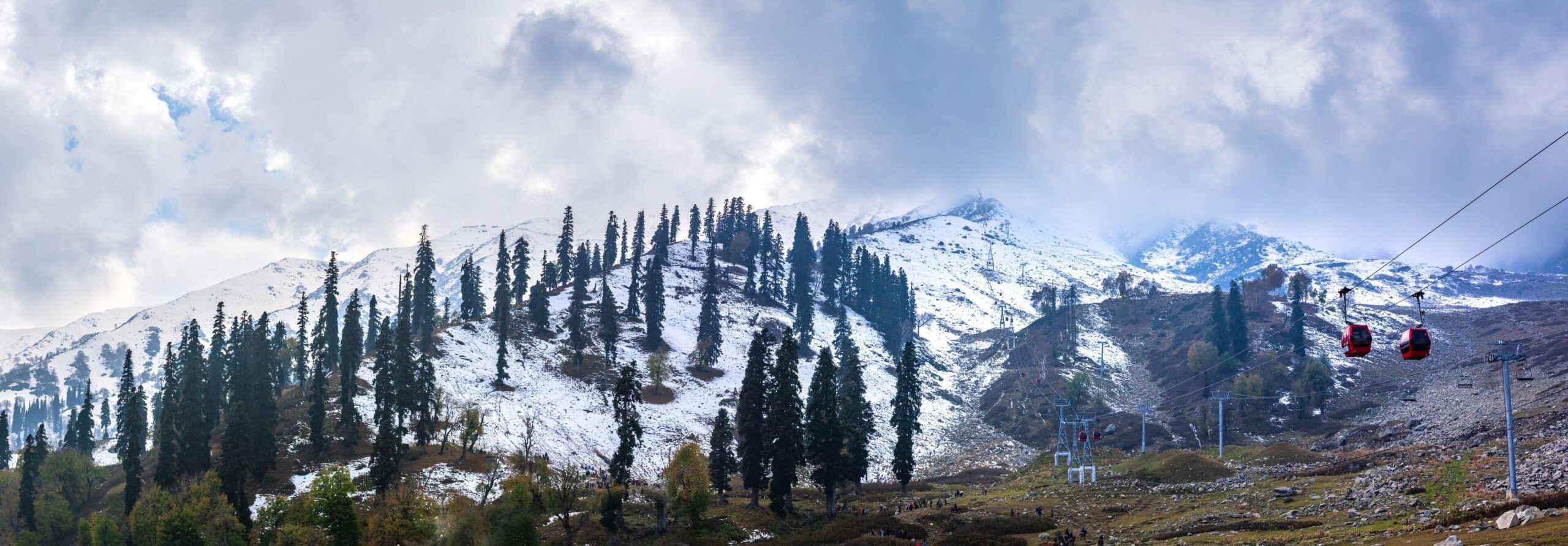
The snowfall was not a blanket across the entire Valley. It was concentrated in higher elevations, including Apharwat and Gondola Phase 2 in Gulmarg, and Kabul Gali and parts of Tulail Valley in the Gurez sector. Snow was also reported from higher reaches around Zojila and Sonamarg.
For tourists, the images offer an early glimpse of Kashmir’s winter landscape. For farmers, however, the weather comes at a sensitive point in the agricultural calendar, when apple and paddy harvesting is already underway.
And for residents and travellers, the sudden change is a practical reminder that Kashmir’s mountain weather can shift quickly, particularly on high-altitude roads.
Kashmir snowfall arrives as autumn begins to take hold
The first snowfall of the season was reported from the upper reaches of Gulmarg during the night of September 16-17. Officials said the Apharwat Peak and Gondola Phase 2 area received snow, leaving a thin white layer over the higher slopes of the popular ski destination.
In north Kashmir’s Gurez sector, snowfall was recorded at Kabul Gali in Tulail Valley, a high-altitude pass located at roughly 4,167 metres. The pass links Tulail Valley with the Mushkoh Valley towards the Drass sector.
The weather system also brought snow to higher parts of Zojila Pass and the Zero Point area near Sonamarg.
This distinction matters. Reports describing Kashmir as completely “covered in snow” can create the impression that winter has arrived across the Valley. The official observations show something more precise: early snowfall has affected the higher mountain reaches, while the plains have mainly experienced rain and cooler temperatures.
That is a familiar pattern in the Himalayas. As temperatures fall with elevation, precipitation that reaches the valley floor as rain can turn into snow several thousand metres higher.
Srinagar gets rain as temperatures fall
The change was not limited to the mountains.
According to the Meteorological Centre Srinagar, Srinagar recorded 8 mm of rainfall in the 24 hours ending at 8:30 am on September 17. Qazigund received 13.4 mm, Pahalgam 13 mm, Kukernag 14.4 mm and Gulmarg 13.2 mm during the same period.
The temperature response was noticeable.
Srinagar’s minimum temperature was recorded at 13.4°C, while Gulmarg’s minimum fell to 5.8°C. Gulmarg’s maximum temperature of 11.2°C was 7.4°C below normal, while Pahalgam’s maximum of 14°C was 9.9°C below normal.
The contrast illustrates how dramatically conditions can vary across relatively short distances in Kashmir.
While residents in Srinagar experienced a cool, rainy day, the higher reaches were already seeing snow.
What about waterlogging in Srinagar?
The summary of the weather event described heavy showers and waterlogging in low-lying parts of Srinagar. Available official weather data confirms rainfall in the city, but the reports reviewed for this article do not establish widespread severe waterlogging from this particular September 17 spell.
That distinction is important. Srinagar has repeatedly faced waterlogging during intense rainfall, and recent ground reports have documented drainage-related problems, but those reports should not automatically be attached to every rainfall episode.
For September 17, the stronger verified fact is that rain affected the city while the temperature dropped sharply.
Is winter arriving early in Kashmir?
The snowfall is an early winter-like event at high elevations, but it would be premature to describe it as the beginning of sustained winter across the entire Valley.
The Meteorological Centre Srinagar forecast generally dry weather from September 18 to 25, with only brief isolated spells of rain possible. Partly to generally cloudy conditions and brief rain spells are expected around September 26-27, followed by generally dry weather toward the end of the month.
In other words, Thursday’s snow does not mean Kashmir is moving immediately into a prolonged winter spell.
Mountain weather, especially in September, can produce isolated snowfall at high elevations while warmer conditions continue lower down.
That is why the more accurate description is an autumn-to-winter transition, rather than the arrival of full winter.
Gulmarg gets an early taste of its winter identity
For Gulmarg, snowfall carries a special significance because the destination’s tourism economy is closely associated with winter sports.
The first September snow on Apharwat is unlikely to create a sustained ski season by itself. The thin layer reported this week is very different from the deeper and more persistent snowpack required for skiing and other winter activities.
Yet the visual impact is immediate.
Green mountain slopes, early autumn colours and patches of fresh snow create a landscape that can be particularly attractive to visitors seeking Kashmir’s changing seasons.
The snowfall also gives tourism operators an early opportunity to begin preparing for the winter season, although the timing and intensity of future snowfall will ultimately determine how strong the ski season becomes.
Planning a Kashmir trip around the weather?
If you are travelling to Kashmir in the coming weeks, weather conditions should be treated as part of the itinerary rather than an afterthought. A local travel operator such as JKL Travels can help coordinate Gulmarg, Sonamarg, Pahalgam and Srinagar travel while allowing room for changes when mountain weather shifts.
Gurez: spectacular snow, but a more complicated travel story
Gurez presents a different picture.
The valley’s dramatic mountains, remote villages and high-altitude landscapes make it one of Kashmir’s most distinctive destinations. But its geography also means that access is more weather-sensitive than for Srinagar or the major tourist circuits.
The Razdan Pass, the principal road approach to Gurez, sits at high elevation. Winter snowfall eventually closes the route for an extended period, cutting the valley off by road for much of the cold season.
That makes the September snowfall both visually attractive and operationally significant.
For travellers, the message is simple: photographs of fresh snow should not be interpreted as a guarantee that every road or destination is freely accessible.
Travellers heading towards higher reaches have been advised to exercise caution as weather conditions change.
Roads become the immediate concern as snow reaches higher elevations
Mountain roads react differently to rain and snow than ordinary urban roads.
Wet surfaces can reduce tyre grip. Temperatures around freezing can create icy patches at higher elevations. Visibility can deteriorate rapidly during rain, snowfall or cloud cover. Rockfalls and landslides can also become a concern on vulnerable stretches.
The September 18 traffic advisory for J&K separately warned commuters about slow movement, shooting stones, landslide-prone stretches and changing road conditions on major routes including NH-44.
This does not mean the entire Kashmir road network is disrupted by the snowfall. Rather, it reinforces a recurring lesson for mountain travel: road conditions need to be checked shortly before departure.
That is particularly relevant for travellers heading towards Gulmarg, Sonamarg, Gurez and other high-altitude areas.
Travelling to Kashmir after the first snowfall?
For visitors planning a Kashmir road trip, JKL Travels can be a useful option for arranging local transport and adjusting routes around weather and road conditions. Travellers should still check the latest traffic and weather advisories before leaving for higher reaches.
Rain and apple harvesting: relief mixed with caution
The weather change comes at an important time for Kashmir’s horticulture sector.
Apple harvesting is entering a crucial phase across many orchards. Recent reports from growers indicate that the cooler weather has brought relief after warmer conditions had raised concerns about heat stress and sunburn in some fruit. Rain has also improved soil moisture in orchards.
But rainfall is not automatically good news during harvest.
Once fruit is ready to be picked, prolonged wet conditions can complicate harvesting, handling, transport and storage. Growers have to balance the benefits of cooler weather with the need to protect mature fruit from weather-related losses.
The Meteorological Centre has advised farmers to continue apple and paddy harvesting from September 18, as weather conditions are expected to improve.
That forecast offers some breathing room to farmers who have been watching the sky closely.
Paddy harvest faces its own weather window
Paddy harvesting is another important seasonal activity in Kashmir.
The timing of harvest is critical because standing crops and harvested grain are vulnerable to prolonged rain. Farmers therefore need dry periods not only to cut the crop but also to dry, store and transport it safely.
The latest MeT advice reflects that reality. Farmers have been urged to plan harvesting and other agricultural operations while taking local weather conditions into account.
The return of predominantly dry conditions from September 18 could therefore be important for farm operations.
The broader lesson is that the same rain can mean very different things to different parts of Kashmir’s economy.
For a tourist, it may mean misty mountains and dramatic photographs. For an orchardist, it may improve soil moisture and fruit colour. For a farmer preparing to harvest paddy, it may mean waiting for a safe window.
Will the snowfall boost Kashmir tourism?
It is likely to generate interest, particularly among travellers attracted to early snow, but there is a difference between tourism excitement and a full winter tourism season.
Gulmarg’s winter economy depends on sustained snowfall and suitable conditions over a much longer period. A single September snowfall does not establish what the coming ski season will look like.
Still, early snow has a powerful promotional effect.
Images of Apharwat covered in white can circulate widely across social media, while travellers who prefer cooler weather may begin planning trips earlier. Hotels, transport operators, guides, restaurants and other tourism-linked businesses can all benefit if visitor interest translates into actual bookings.
For Kashmir’s tourism economy, therefore, the first snowfall is as much a psychological signal as a weather event.
A beautiful landscape with a practical warning
There is an understandable tendency to view the first snowfall only through photographs.
The mountains turn white. Meadows become misty. Trees and rooftops acquire a winter glow. Kashmir’s landscape appears to change in a matter of hours.
But the same weather that produces those images can make life harder for people living and working in the mountains.
Road journeys take longer. Outdoor work becomes more difficult. Farmers have to monitor forecasts more closely. Tour operators need contingency plans. Residents in higher areas begin preparing for colder conditions well before winter settles into the Valley.
This is particularly important in a region where altitude differences create several weather zones within the same day.
A traveller can leave Srinagar in mild autumn conditions and encounter rain, cold winds and eventually snow as the road climbs towards the mountains.
What travellers should know before heading to Gulmarg or Gurez
The current forecast provides a relatively favourable window after the September 17 weather spell, but conditions in the mountains can change faster than forecasts for the Valley floor.
Travellers should:
- Check the latest MeT Srinagar forecast before departure.
- Confirm road conditions before travelling to high-altitude destinations.
- Carry warm layers even if Srinagar feels comfortable.
- Avoid treating September snowfall as evidence of permanent snow cover.
- Keep additional travel time for mountain routes.
- Follow local traffic and administration advisories.
- Be particularly careful during rain, low visibility and early-morning travel.
The September 18 forecast for Gulmarg showed temperatures around 4°C to 15°C, with clearer and generally drier conditions expected from September 19 onward.
That means visitors may see the fresh snow while also experiencing a return towards more stable autumn weather.
Want to see Kashmir’s seasonal transition?
A Kashmir trip during this period can combine Srinagar’s lakes and gardens with Gulmarg’s high-altitude landscapes, Pahalgam’s valleys and, where road conditions permit, Gurez’s remote mountain scenery. JKL Travels can assist with local transport planning for travellers who want flexibility as the weather changes.
Kashmir’s changing weather is more than a tourism postcard
The first snowfall in Gulmarg and Gurez is visually striking, but its significance goes beyond tourism.
It highlights how closely Kashmir’s environment, agriculture, transport and economy remain tied to weather.
The Valley’s apple growers are entering a major harvesting period. Paddy farmers are working around changing weather windows. Mountain communities depend on reliable road access. Tourism operators are watching snowfall patterns because winter conditions can shape an important part of their annual business.
At the same time, the event offers another reminder of the region’s environmental sensitivity.
Kashmir’s mountains do not respond uniformly to weather. A few degrees of temperature difference can determine whether precipitation falls as rain or snow. A short burst of intense rainfall can affect roads and drainage, while persistent snow at higher elevations can influence access and water availability later in the season.
That complexity is easy to miss when the weather is reduced to a beautiful photograph.
The road from autumn to winter has begun, but winter is not here yet
For now, the most accurate picture is one of transition.
Gulmarg and Gurez have received the season’s first snowfall in their higher reaches. Srinagar and much of the Valley have experienced rain. Temperatures have fallen sharply, particularly in the mountains. And the forecast points towards a return to generally drier weather over the coming days.
The snow will likely become a talking point among tourists and residents alike. But for farmers, road users and mountain communities, the bigger question is what comes next.
Will the remainder of September remain relatively dry? How quickly will autumn colours spread through the Valley? When will sustained snowfall begin at the major winter destinations? And how will changing weather patterns affect Kashmir’s increasingly weather-sensitive tourism and agricultural economy?
Those answers will come with the season.
For now, Kashmir has simply offered its first unmistakable glimpse of winter.
And on the mountains of Gulmarg and Gurez, that glimpse has arrived earlier than the calendar might suggest.
Planning a Kashmir holiday?
If the first snowfall has inspired a trip, JKL Travels can help organise Kashmir travel around the season, including transport between Srinagar and major tourist destinations. For high-altitude excursions, travellers should always confirm the latest weather and road status before setting out.